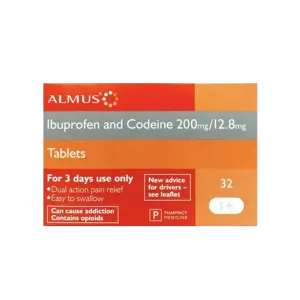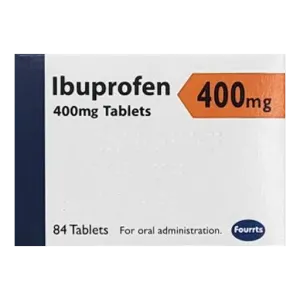
What are Ibuprofen tablets?
Ibuprofen tablets are an everyday painkiller belonging to the non-steroidal anti-inflammatory (NSAID) class of drugs. They are commonly used to treat symptoms of arthritis, toothaches, muscle aches, and headaches.
Ibuprofen also comes as a liquid for those who struggle to swallow tablets and a gel which can be directly applied to the area that is causing you pain.
How to buy Ibuprofen tablets online
You can use our online pharmacy service to buy Ibuprofen tablets online in the UK with collection, next day and free delivery available. We are a regulated GPhC registered pharmacy based in the UK. As Ibuprofen tablets in a pack of 84 are a 'Pharmacy-only' (P) medicine a pharmacist needs to have a consultation to make sure treatment is appropriate before you can purchase Ibuprofen.
Upon completion of your order, our pharmacist will then review your online assessment. If your assessment is approved, our pharmacy team will then dispense your order, which will be dispatched the same day using your chosen delivery method.
What can Ibuprofen be used for?
Ibuprofen can be taken for a variety of aches and pains including but not limited to:
- Arthritis – reduces inflammation and swelling in the joints, which can relieve pain and improve mobility in people with osteoarthritis or rheumatoid arthritis.
- Toothaches – reduces pain and inflammation caused by a toothache.
- Muscle aches – reduces muscle pain and inflammation, making it effective for relieving muscle aches caused by exercise or strain.
- Headaches – reduces inflammation and swelling that can cause headaches, making it effective for relieving tension headaches and migraines.
- Fever – helps regulate body temperature and reduces fever.
How Ibuprofen tablets work
Ibuprofen is a non-steroidal anti-inflammatory drug (NSAID). It blocks cyclooxygenase (COX) enzymes, reducing prostaglandins involved in pain, fever and inflammation. This can help with muscle aches, joint pain and other painful conditions.
Prostaglandins also help protect the stomach lining. Reducing them explains why ibuprofen can cause stomach irritation, ulcers or bleeding; taking it with food does not remove those risks.
How to take Ibuprofen tablets
Adults and young people aged 12 and over: take one 400mg tablet up to three times daily as needed. Leave at least four hours between doses and do not take more than three tablets (1200mg) in 24 hours for self-care. Take with water, preferably with or after food.
Use the lowest dose that helps for the shortest time. Ages 12 to 17 should see a doctor if treatment is needed for more than three days or symptoms worsen. Adults should seek advice if symptoms persist or worsen, or tablets are needed for more than ten days.
Longer-term treatment for chronic pain needs a clinician’s supervision. They may prescribe stomach protection such as omeprazole or lansoprazole; do not start or stop prescribed medicines yourself.
Ibuprofen side effects
Like any medication Ibuprofen can cause side effects these include:
- Stomach irritation
- Heartburn
- Nausea
- Dizziness
- Trapped wind
Taking Ibuprofen with food can help with some of these side effects. If you experience any of these side effects and they do not go away, speak to a doctor or pharmacist for advice.
You may consider using Ibuprofen gel instead of the tablets as you are less likely to experience side effects when using the gel.
Stop taking it and get urgent medical help for vomiting blood or material that looks like coffee grounds, black tarry stools, or severe stomach pain. These can be signs of stomach bleeding or an ulcer. Do not wait for them to settle. Other serious symptoms needing urgent advice include:
- Severe indigestion
- Severe heartburn
- Vomiting blood or dark particles
- Blood in your stools
- Frequent sore throat,
- Blood in your urine
- Slow or irregular heart beat
- Signs of jaundice such as yellowing of the skin or the whites of the eyes
Call 111 or your doctor if you experience any of the mentioned. If you experience a high temperature, feel sick or start being sick, get confused, have a headache, neck stiffness and sensitivity to light or experience chest pains call 999.
Who cannot take Ibuprofen
It is generally well tolerated and suitable for most adults and children. However it may not be suitable if you:
- Have previously had an allergic reaction to Ibuprofen.
- Have a history of asthma attacks after taking aspirin or other NSAIDs
- Have a history of or active stomach ulcers or bleeding
- Suffer from liver problems
- Suffer from kidney problems
- Have an increased chance of bleeding
- Have severe heart failure
- Have uncontrolled high blood pressure
- Have chickenpox or shingles
- Have Crohn's disease or ulcerative colitis
They should also be used with caution in those who are 65 years of age and older.
Ibuprofen and pregnancy
It is not recommended to be taken while pregnant or if you are trying to get pregnant as it can affect your baby's circulation and kidneys
Ibuprofen and breastfeeding
Ibuprofen is safe to take while breastfeeding at recommended doses a tiny amount may pass through breast milk into your baby but it is unlikely to do any harm.
Ibuprofen and fertility
If you are trying to get pregnant you should avoid any anti-inflammatory medicines, like Ibuprofen. These medicines in large doses or when taken for a long period of time can affect ovulation and make it more difficult for you to get pregnant. If you are trying to become pregnant and you take Ibuprofen, talk to your doctor to discuss your options.
Ibuprofen interactions
The following medicines interact with Ibuprofen, it may not suitable or to only be used with caution if you take:
- Other NSAIDs: do not combine them with ibuprofen; ask a pharmacist before changing prescribed treatment
- Anticoagulant medicine such as warfarin, apixaban or rivaroxaban
- Corticosteroids - such as prednisolone
- Diuretics - such as furosemide
- Medicines for heart problems
- Medicines for high blood pressure
- Antidepressants - such as citalopram
- Medicine used to treat rheumatoid arthritis - such as methotrexate
Please note: As this medication is NSAID it is important you do not take any other anti-inflammatory medicines.
You should also be aware that any herbal or alternative remedies you take may also interact with this medication and cause side effects. If you are taking any herbal or alternative remedies make sure to mention them to your GP, or on the consultation form so we can make sure they are safe to take together.
For a full list of interactions see: Ibuprofen interactions.
Ibuprofen and other painkillers
Ibuprofen can be taken with other painkillers as long as they do not belong to the class of NSAIDs or COX-2 inhibitors such as Naproxen, Aspirin, Diclofenac, Celecoxib or Etoricoxib. Be wary if you purchase any combination medicines such as cold & flu as they may contain a NSAID, speak to the pharmacist if you are unsure.
Ibuprofen can be safely taken with Paracetamol and codeine as these work differently to Ibuprofen.
Ibuprofen vs Naproxen
They are both NSAIDs and so they are both similar in many ways.
The main difference between the two is the duration of action. Ibuprofen is short acting with its effect lasting around 4-6 hours, compared to naproxen which is long acting with its effect lasting around 8-12 hours. Naproxen is more likely to cause an upset stomach than ibuprofen.
Ibuprofen starts working within 30 minutes, compared to naproxen which takes up to 1 hour.
They are not interchangeable milligram for milligram. A pharmacist or prescriber can help choose the appropriate medicine and dose; do not combine them.
Ibuprofen is the most appropriate NSAID for children.
Both can cause stomach and other serious side effects, especially at higher doses or with longer use. Do not exceed the directions for the medicine you have been supplied.
They also share the same side effects including heartburn, constipation, abdominal pain, nausea, headache, dizziness, drowsiness and itching.
Although naproxen is more likely to cause a stomach upset than ibuprofen, ibuprofen is still likely to cause stomach upsets. You should always take them with food and for as short a period as possible.
Ibuprofen tablets alternatives
Alternatives to Ibuprofen tablets include:
You can also use these products instead of or alongside Ibuprofen:
- Paracetamol tablets
- Co-codamol tablets
- Co-codamol soluble tablets
- Paramol tablets
- Solpadeine Plus capsules – these contain caffeine
- Solpadeine Plus soluble tablets – these contain 8mg of codeine.
- Solpadeine Max tablets – these contain 12.8mg of codeine.
- Solpadeine Max Soluble tablets – these contain 12.8mg of codeine.
Frequently asked questions
Can you buy Ibuprofen tablets over the counter?
Yes Ibuprofen can be bought over the counter without a prescription.
Can I take Ibuprofen while pregnant?
It is usually not recommended to be taken while you are pregnant. It can pass through into your baby and cause circulation problems and problems with amniotic fluid levels. Contact a doctor if you want to taken Ibuprofen while you are pregnant and they can weigh up the benefits vs risks of taking the medicine while pregnant.
Can I take Ibuprofen while breastfeeding?
Ibuprofen is safe to take while breastfeeding at recommended doses a tiny amount may pass through breast milk into your baby but it is unlikely to do any harm.
How long can I take Ibuprofen for?
Use Ibuprofen for the shortest time needed. Ages 12 to 17 need medical advice if it is required for more than three days; adults should seek advice if it is needed for more than ten days. Seek help sooner if symptoms worsen. Longer-term use and any stomach-protection medicine should be supervised by a clinician.
Do Ibuprofen tablets expire?
Yes, like most medicines it has a shelf life and will become less effective if it is left unused. Always check the expiry date of any medicines you are taking before you take them, the expiry date refers to the end of the month. If you find your medication has expired, you can post them to us, bring them to us or take them to your nearest pharmacy for safe disposal.
How should I store Ibuprofen tablets?
They should be stored in a dry area below 25°C and kept out of direct sunlight. Storing the tablets incorrectly could result in the tablets becoming less effective.
How quickly does Ibuprofen work?
After you take Ibuprofen its anti-inflammatory effects will kick in after around an hour however it can take a few doses of Ibuprofen for it to reach its full effect.
How long does Ibuprofen last?
After you take ibuprofen its anti-inflammatory effects usually lasts between 4 and 6 hours
Can I take Ibuprofen with other painkillers?
If your other pain relief medication is also an anti-inflammatory such as Naproxen, Aspirin or a COX-2 inhibitor such as Celecoxib you cannot take them together. It is fine to take other painkillers such as codeine and paracetamol alongside Ibuprofen for a short period. If you need to take them together for long periods you should contact your doctor.
Can I take Ibuprofen with alcohol?
It is fine to drink alcohol while taking Ibuprofen. Be aware that ibuprofen can irritate your stomach lining and drinking alcohol above the recommended limit can further add to this irritation leading to more side effects.
Is it safe to buy Ibuprofen tablets from your pharmacy?
We are a General Pharmaceutical Council (GPhC) registered pharmacy and we source all our pharmaceutical products from reputable wholesalers, the same wholesalers that provide the medicines used to fill NHS prescriptions.
If you buy them from an unregistered pharmacy you may be wasting your money at best or at worst harm yourself buying and taking fake tablets. Always check to make sure where you are buying them from are registered with the GPhC.