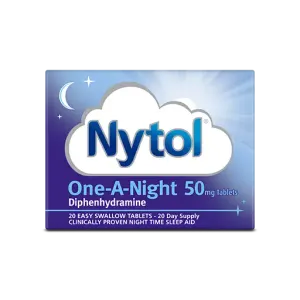

Nytol One-A-Night 50mg Tablets
Nytol One-A-Night is a pharmacy sleep aid used for the short-term relief of temporary sleeping difficulties.
Each tablet contains 50mg of diphenhydramine hydrochloride, a sedating antihistamine that causes drowsiness and may help you fall asleep more easily.
The convenient one-tablet dose is taken approximately 20 minutes before going to bed. Nytol One-A-Night is suitable for adults and young people aged 16 years and over, subject to suitability and pharmacist approval.
[1]
- Temporary sleep support: Helps relieve short-term sleeping difficulties
- One-tablet dose: Each tablet contains 50mg of diphenhydramine hydrochloride
- Convenient to take: Take one tablet approximately 20 minutes before bed
- Suitable for: Adults and young people aged 16 years and over
- Pack size: 20 tablets
Nytol One-A-Night is a pharmacy medicine. You may be asked to complete a short suitability assessment before your order can be approved.
What is Nytol One-A-Night used for?
Nytol One-A-Night is used to relieve temporary sleeping difficulties. These may occur during periods of stress, following a change in your normal routine, because of jet lag or during difficult personal circumstances.
It may help you fall asleep more quickly, sleep for longer and feel better rested after a full night's sleep.
[1]
Nytol One-A-Night does not cure insomnia or treat an underlying medical or mental health condition. It is intended for temporary sleep disturbance and should not be used as a long-term sleeping treatment.
How does Nytol One-A-Night work?
Nytol One-A-Night contains diphenhydramine hydrochloride, which belongs to a group of medicines called sedating antihistamines.
Histamine is involved in maintaining alertness in the brain. Diphenhydramine blocks some of the effects of histamine, reducing alertness and causing drowsiness. This can make it easier to fall asleep when you are experiencing temporary sleeping difficulties.
[1]
[3]
Diphenhydramine usually begins to cause drowsiness approximately 20 to 30 minutes after it is taken, although the effect can vary between individuals. [3]
How to take Nytol One-A-Night
- Adults and young people aged 16 years and over: Swallow one tablet with water approximately 20 minutes before going to bed.
- Do not exceed the recommended dose: Do not take more than one tablet at bedtime.
- Do not repeat the dose: Do not take another tablet if you wake during the night.
- Short-term use only: Do not use Nytol One-A-Night continuously for longer than 2 weeks without consulting a doctor.
- Missed dose: Do not take a double dose. Take the next dose at the usual time if it is still required.
Always follow the instructions on the packaging and read the patient information leaflet supplied with the medicine. [4]
How long can I take Nytol One-A-Night?
Nytol One-A-Night should only be used for a short period and must not be taken continuously for longer than 2 weeks without consulting a doctor.
Diphenhydramine may become less effective when it is used continuously. It is also possible to become dependent on diphenhydramine when it is taken for too long without a break.
[3]
Speak to your GP if your sleeping difficulties continue after 2 weeks, repeatedly return or are affecting your ability to manage normal daily activities.
Who should not take Nytol One-A-Night?
Do not take Nytol One-A-Night if:
- You are under 16 years of age
- You are allergic to diphenhydramine hydrochloride or any of the other ingredients
- You have an obstruction or narrowing in your stomach or intestine, including an obstruction caused by an ulcer
- You are an older person currently experiencing confusion
- You are already taking another medicine containing diphenhydramine
Nytol One-A-Night must not be given to a child to make them sleep. Diphenhydramine is only suitable for treating short-term sleeping problems in people aged 16 years and over. [5]
Speak to a pharmacist or doctor before taking Nytol
Nytol One-A-Night may not be suitable for everyone. Speak to your pharmacist or doctor before taking it if you:
- Have a breathing condition: Including asthma, bronchitis or chronic obstructive pulmonary disease (COPD)
- Have glaucoma: Particularly narrow-angle or angle-closure glaucoma
- Have prostate or urinary problems: Including an enlarged prostate, urinary retention or difficulty emptying your bladder
- Have liver or kidney problems: Particularly moderate to severe liver or kidney impairment
- Have epilepsy: Or another condition that causes seizures or fits
- Have myasthenia gravis: A condition that causes muscle weakness
- Have a stomach ulcer or digestive obstruction: Particularly if this causes narrowing or blockage
- Are aged over 65: Older adults may be more sensitive to drowsiness, dizziness, confusion and unsteadiness
- Have an intolerance to some sugars: Nytol One-A-Night contains lactose
- Are due to have an allergy test: Diphenhydramine may affect the results of allergy skin testing
If your sleeping problem may be caused by another health condition, your pharmacist may recommend that you speak to your GP rather than treating it with a pharmacy sleep aid. [5]
Can Nytol One-A-Night interact with other medicines?
Diphenhydramine can interact with other medicines and may increase side effects such as drowsiness, confusion, dry mouth, blurred vision or difficulty passing urine.
Speak to your pharmacist or doctor before taking Nytol One-A-Night if you use:
- Other antihistamines: Including sedating antihistamines, allergy treatments, skin treatments and some cough or cold medicines
- Other sleeping treatments: Including prescription sleeping tablets or other pharmacy sleep aids
- Medicines for anxiety: Including sedatives or tranquillisers such as diazepam
- Strong painkillers: Particularly opioid medicines such as codeine, tramadol or morphine, which can increase drowsiness
- Antidepressants: Including tricyclic antidepressants, venlafaxine and monoamine oxidase inhibitors
- Monoamine oxidase inhibitors: Tell your pharmacist if you currently take an MAOI or stopped taking one within the previous 2 weeks
- Anticholinergic medicines: Including atropine and other medicines that cause a dry mouth, blurred vision or difficulty passing urine
- Metoprolol: A medicine used for certain heart conditions and high blood pressure
- Any medicine that causes drowsiness: Taking these with diphenhydramine may make you excessively sleepy
Tell your pharmacist about all prescription medicines, non-prescription medicines, vitamins, herbal products and supplements you use. [7]
Can I drink alcohol while taking Nytol?
Do not drink alcohol while taking Nytol One-A-Night.
Alcohol can significantly increase the sedating effects of diphenhydramine. This may cause excessive drowsiness, reduced coordination and difficulty waking.
[3]
Can I drive after taking Nytol?
Nytol One-A-Night is intended to cause sleepiness and may also cause dizziness, blurred vision, reduced concentration and slower reactions.
Do not drive, cycle, operate machinery or use tools after taking Nytol One-A-Night. Do not drive the following morning if you still feel sleepy, dizzy, unsteady, unable to concentrate or otherwise affected.
[6]
Pregnancy and breastfeeding
Nytol One-A-Night is not generally recommended during pregnancy or while breastfeeding.
Speak to your doctor before taking this medicine if you are pregnant, think you may be pregnant, are trying to become pregnant or are breastfeeding.
[1]
Nytol One-A-Night side effects
Like all medicines, Nytol One-A-Night can cause side effects, although not everyone experiences them.
Common side effects include:
- Feeling tired or drowsy during the day
- Reduced attention or difficulty concentrating
- Dizziness or feeling unsteady
- Dry mouth
Other possible side effects include:
- Blurred vision
- Headache
- Nausea or vomiting
- Difficulty passing urine
- Thickened mucus or bronchial secretions
- Muscle twitching
- Pins and needles
- Restlessness, nervousness or unexpected increased energy
- Confusion, particularly in older adults
- A fast, irregular or noticeable heartbeat
Stop taking Nytol One-A-Night and seek urgent medical advice if you experience a fast or irregular heartbeat, severe confusion, significant restlessness or difficulty passing urine.
Call 999 if you experience a seizure or signs of a serious allergic reaction, including swelling of the lips, mouth, tongue or throat, severe difficulty breathing, choking, gasping or being unable to wake. [6]
These are not all the possible side effects. Read the patient information leaflet supplied with the medicine for a complete list.
What should I do if I take too much?
Taking too much diphenhydramine can be dangerous.
If you take more Nytol One-A-Night than recommended, contact NHS 111, your doctor or an emergency department immediately. Do not wait for symptoms to develop and do not drive yourself for medical treatment.
When should I speak to my GP?
Speak to your GP or another appropriate healthcare professional if:
- Your sleeping difficulties continue after 2 weeks
- Your sleep problems keep returning
- You have experienced insomnia for several months
- Your lack of sleep is making it difficult to cope with work or normal daily activities
- You regularly snore loudly, choke or gasp during sleep
- You experience an uncontrollable urge to move your legs at night
- You unexpectedly fall asleep during the day
- Your sleep problems are accompanied by significant anxiety, depression or changes in your mental health
Persistent insomnia may be a sign of an underlying medical, psychological or sleep-related condition that requires assessment. [8]
Small changes to your sleep routine
Keep a regular getting-up time, even after a poor night, and only go to bed when sleepy. Use the hour before bed to wind down, keep the bedroom dark and quiet, and avoid caffeine late in the day. Read the NHS advice on insomnia for practical steps alongside the review advice above.
Nytol One-A-Night ingredients
Active ingredient: Each tablet contains 50mg of diphenhydramine hydrochloride.
Other ingredients: Anhydrous lactose, microcrystalline cellulose, maize starch, stearic acid and silicon dioxide.
Nytol One-A-Night contains lactose. Speak to your doctor or pharmacist before taking it if you have been told that you have an intolerance to certain sugars.
Ingredients can occasionally be updated, so always check the packaging and patient information leaflet supplied with your medicine.
How to store Nytol One-A-Night
- Keep the medicine out of the sight and reach of children
- Store the tablets in a dry place
- Do not use the tablets after the expiry date printed on the packaging
- Do not dispose of unwanted medicines in household wastewater
- Return unwanted or expired medicines to a pharmacy for safe disposal
Frequently asked questions
How quickly does Nytol One-A-Night work?
Diphenhydramine normally begins to make you feel drowsy approximately 20 to 30 minutes after taking it. This is why Nytol One-A-Night should be taken approximately 20 minutes before going to bed.
Can I take Nytol One-A-Night every night?
Nytol One-A-Night may be used for temporary sleeping difficulties but must not be used continuously for longer than 2 weeks without consulting a doctor. It may become less effective with continuous use, and prolonged use can lead to dependence.
Can I take another tablet if I wake during the night?
No. Do not take an additional tablet if you wake during the night. Taking another dose could cause excessive or prolonged drowsiness and increase the risk of side effects.
Is Nytol One-A-Night a herbal medicine?
No. Nytol One-A-Night contains diphenhydramine hydrochloride, a sedating antihistamine. It is different from products in the Nytol Herbal range, which contain herbal ingredients such as valerian.
Can I take Nytol with another antihistamine?
Do not combine Nytol One-A-Night with another antihistamine unless a doctor or pharmacist has specifically advised you to do so. Remember that antihistamines may also be included in cough, cold, allergy and skin treatments.
Does Nytol cure insomnia?
No. Nytol One-A-Night may temporarily relieve sleeping difficulties, but it does not cure insomnia or treat its underlying cause. Persistent or recurring insomnia should be assessed by a healthcare professional.
References and further information
- Nytol: Information for healthcare professionals – Official product information covering the indication, dose, warnings, interactions and side effects.
- Nytol One-A-Night patient information leaflet (February 2017) – Product-specific instructions, ingredients, precautions and possible side effects.
- NHS: About diphenhydramine – How diphenhydramine works, when it begins working and important safety advice.
- NHS: How and when to take diphenhydramine – Dose and instructions for short-term sleeping problems.
- NHS: Who can and cannot take diphenhydramine – Age restrictions, contraindications and conditions requiring professional advice.
- NHS: Side effects of diphenhydramine – Common and serious side effects and when to seek medical help.
- NHS: Taking diphenhydramine with other medicines – Information about medicine interactions and sedating treatments.
- NHS: Insomnia – Advice about insomnia, self-care and when to speak to a GP.
This product information is intended to support, rather than replace, the patient information leaflet supplied with the medicine or advice from a doctor or pharmacist. Always read the label and leaflet before use.