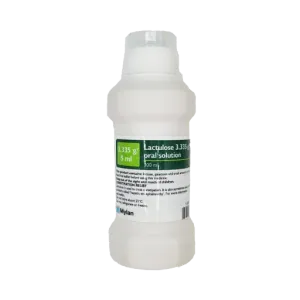
What is Lactulose?
Lactulose is used to treat constipation by softening stools and making bowel movements easier. Lactulose is an osmotic laxative that works by drawing water into the bowel to soften the stools and make them easier to pass.
It can be taken to treat constipation by:
- Pregnant women
- Children
- Adults
- Elderly
It comes as a sweet oral solution which can be swallowed on its own or mixed with water or juice. Children should only have it on a doctor’s advice; suitability and dose depend on age and the reason for constipation.
What can cause constipation?
Constipation is a common condition that can affect people of all ages and can be caused by lifestyle factors such as a lack of fibre in the diet, dehydration, or a sedentary lifestyle. Other causes of constipation include certain medical conditions and medications such as opioids. When left untreated, constipation can lead to discomfort and bloating.
How does Lactulose solution work?
Lactulose is an osmotic laxative and works by drawing water into the bowel to soften the stools and make them easier to pass. The active ingredient Lactulose, is not absorbed into the body and remains in the bowel to increase the water content of the stools. This results in an easier bowel movement and relief from constipation.
The dose of Lactulose Solution
These are total daily constipation doses for the currently supplied lactulose 3.3g/5ml solution. Follow your bottle’s directions or prescription. Children, infants and babies should only take it on a doctor’s advice, with their treatment supervised.
- Adults and adolescents over 14: Starting dose 15–45ml a day, then 15–30ml a day according to response.
- 7 - 14 years old: Starting dose of 15ml and then maintain with 10-15ml a day.
- Children 1 - 6 years old: 5-10 ml a day.
- Babies under 1 year: up to 5ml a day, only as prescribed.
Use the measuring cup supplied, not a kitchen spoon. Take at the same time each day, either as one daily dose or divided into up to three doses as advised. Swallow promptly; you can dilute it with water or juice. Drink enough fluid during the day, unless your clinician has asked you to restrict fluids. Do not double a missed dose.
Lactulose time to work
Lactulose usually takes two to three days to work. Speak to a doctor if you feel worse or have not improved after three days. Do not use it for more than two weeks without medical advice.
Who cannot take Lactulose?
Do not take lactulose if you have galactosaemia, an allergy to an ingredient, acute inflammatory bowel disease such as Crohn’s disease or ulcerative colitis, or a bowel blockage, perforation or risk of perforation. Unexplained abdominal pain needs assessment before treatment. Ask a pharmacist or doctor if you:
- Have ever experienced an allergic reaction to Lactulose or any other ingredient in Lactulose solution.
- If you are diabetic and are needing to use high doses for a long period of time, it may not suitable as it can affect your blood sugar levels.
- Have a rare health problem where the body cannot process a sugar called galactose (galactosaemia).
- Have irritable bowel syndrome (IBS), as it can increase gas in the stomach and make your IBS worse.
Tell your pharmacist about other medicines, particularly water tablets, steroids, amphotericin B, digoxin or medicines designed to release in the colon. Lactulose can affect potassium balance or how some of these medicines work.
Lactulose solution ingredients
The currently supplied solution contains lactulose 3.3g in each 5ml, with no other added ingredients. Traces of sugars can remain from manufacture, including lactose, galactose, epilactose, tagatose and fructose. Tell your pharmacist about any diagnosed sugar intolerance or allergy before use.
The manufacturer supplied can change, so check your bottle’s label and leaflet each time for its ingredients, strength and instructions.
Keep the bottle tightly closed at no more than 25°C, out of children’s sight and reach. Follow the expiry date on the bottle and return unwanted medicine to a pharmacy.
Side effects
Lactulose can cause side effects. Diarrhoea is very common, particularly at higher doses. Other effects include:
- Wind and bloating
- Abdominal discomfort
- Feeling or being sick
Wind often settles after the first few days. Ask a pharmacist about reducing the dose if diarrhoea develops. Persistent diarrhoea or vomiting can cause dehydration and disturb the balance of salts in your body. Seek urgent advice if you develop:
- Muscle cramps or weakness with severe or prolonged diarrhoea or vomiting
- An irregular heartbeat
- Signs of dehydration, such as passing very little urine
Contact NHS 111 or a doctor promptly for these symptoms. Call 999 for severe breathing difficulty or swelling of the mouth, tongue or throat.
Lactulose and Diarrhoea
Diarrhoea can be a common side effect of Lactulose, if you experience diarrhoea while taking this medication it is important you stay hydrated. You may need to lower your dose if your diarrhoea persists.
Frequently Asked Questions
How long does Lactulose take to work?
Lactulose takes at least two days to work and commonly needs two to three days. It is not a treatment that should be expected to work within a few hours. If constipation has not improved after four or five days, speak to a doctor.
How long can I use Lactulose for?
Take lactulose for as long as your constipation lasts or your doctor recommends. For self-care this is usually up to a week. Speak to a doctor if there is no improvement after four or five days; longer treatment should follow medical advice.
Can Lactulose help with weight loss?
No, Lactulose is not intended for weight loss and should not be used as a weight loss aid. It will only cause you to lose weight due to water loss. However this is dangerous and not sustainable. Prolonged use of Lactulose can lead to dehydration, electrolyte imbalances, and other complications, which can be harmful to your health.
Can you buy Lactulose over the counter?
In the UK, lactulose is classed as a pharmacy medicine meaning it is available to buy over the counter after a short consultation with a pharmacist.